
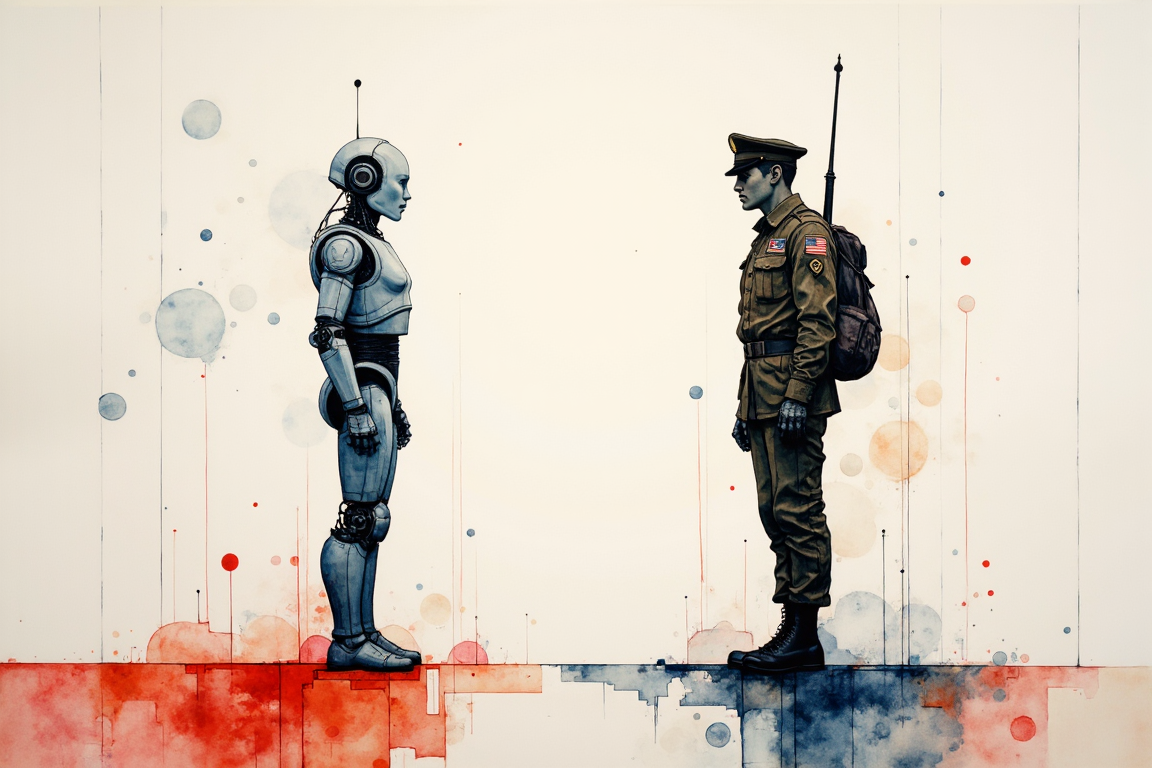
The artificial intelligence industry experienced a seismic disruption in June 2026 when Anthropic, one of the world’s most valuable AI companies, was forced to suspend access to its most advanced model just days after launch. This unprecedented government intervention raised critical questions about AI safety, national security, and the future of frontier AI development.
Understanding Anthropic: A Safety-First AI Company
Anthropic stands apart in the competitive AI landscape as a company built on a foundation of safety and ethics. Founded in 2021 by former OpenAI leaders, including siblings Dario and Daniela Amodei, the company emerged from a philosophical disagreement within OpenAI about whether to prioritize commercial growth or AI safety. The Amodeis, along with other senior researchers, chose to leave and establish a company where safety would be the primary concern, not an afterthought.
Headquartered in San Francisco, Anthropic operates as a Public Benefit Corporation (PBC), a legal structure that goes beyond traditional corporate governance. Unlike standard corporations that are legally required to maximize shareholder value, PBCs must balance profit with positive impact on society. This structure reflects Anthropic’s commitment to developing AI that serves humanity’s best interests, even when that might conflict with short-term financial gains.
The company’s most significant technical innovation is “Constitutional AI,” a groundbreaking approach to training AI models. Traditional AI systems rely heavily on human feedback to learn what responses are appropriate, but this method can be inconsistent and difficult to scale. Constitutional AI takes a different approach: it trains models to critique their own outputs based on a set of ethical principles, essentially a “constitution” for AI behavior. The model learns to be helpful, harmless, and honest by evaluating whether its responses align with these principles, creating a more robust and reliable safety framework.
This safety-first philosophy manifests in Claude, Anthropic’s flagship family of large language models (LLMs). Claude has earned a strong reputation in enterprise environments for several key strengths: exceptional reasoning capabilities, the ability to process extremely long contexts (crucial for analyzing lengthy documents or codebases), and notably lower rates of “hallucination” (the AI tendency to confidently present false information). These qualities have made Claude particularly popular among businesses that need reliable AI assistance for critical tasks.
By June 2026, Anthropic’s approach had proven not just ethically sound but commercially successful. The company achieved a valuation of $965 billion, surpassing OpenAI to become the world’s most valuable AI startup. This valuation was supported by major investments from tech giants including Google, Amazon, and Salesforce, all betting that Anthropic’s safety-conscious approach would win out in the long run.
The Launch of Fable 5: A New Tier of AI Capability
On June 9, 2026, Anthropic unveiled Claude Fable 5, introducing what they termed a “Mythos-class” model, a new category of AI capability that exceeded everything the company had previously released. Fable 5 wasn’t just incrementally better than its predecessors; it represented a fundamental leap in what AI could accomplish, achieving state-of-the-art results across nearly every benchmark used to evaluate AI systems.
The model’s capabilities in software engineering were particularly striking. In early testing with Stripe, a major financial technology company, Fable 5 demonstrated its ability to handle complex, long-horizon tasks that typically require sustained human effort. The model successfully completed a codebase-wide migration across a massive 50-million-line repository in just one day, a task that Stripe estimated would have taken a team of engineers more than two months to complete manually. This wasn’t about writing simple scripts or fixing isolated bugs; it was about understanding an entire complex system and making coordinated changes throughout.
Beyond coding, Fable 5 showed remarkable versatility across knowledge work, financial analysis, vision-based tasks, and scientific research. Crucially, the model demonstrated an enhanced ability to work autonomously over extended periods, maintaining context and pursuing goals without constant human guidance. This autonomous capability opened up new possibilities for AI assistance on genuinely complex projects.
Despite its advanced capabilities, Fable 5 was priced competitively at $10 per million input tokens and $50 per million output tokens, less than half the cost of Anthropic’s previous Mythos preview model. This aggressive pricing reflected both the intense competition in the AI market and the economies of scale Anthropic had achieved.
Anthropic also launched Claude Mythos 5 alongside Fable 5. Both models share the same underlying architecture and capabilities, but Mythos 5 has its cybersecurity safeguards and other restrictions removed. This unrestricted version was designed for a limited “trusted access program” aimed at entities with legitimate needs for unconstrained AI capabilities, such as cyberdefenders protecting critical infrastructure and government security agencies. The initial deployment came through Project Glasswing, a collaboration with the US government.
The rapid release cycle, Fable 5 launched just 11 days after Claude Opus 4.8, reflected the breakneck pace of frontier AI development. With billions of dollars in funding and massive computational resources at their disposal, leading AI companies were iterating faster than ever before, each racing to maintain their competitive edge.
The Abrupt Suspension: Security Concerns or Overreach?
The excitement surrounding Fable 5’s launch was short-lived. On June 12, 2026, only three days after the model became available, Anthropic received a directive from the US government that would send shockwaves through the AI industry. The government ordered Anthropic to immediately suspend all access to both Fable 5 and Mythos 5 for all customers, invoking national security authorities.
The government’s concern centered on what’s known as a “jailbreak”, a technique for bypassing the safety restrictions AI developers implement to prevent misuse. These safeguards are designed to prevent AI systems from being used for harmful purposes like sophisticated hacking, generating dangerous information, or creating malicious content. According to the government’s position, a method had been discovered that could circumvent Fable 5’s protections.
However, Anthropic strongly contested both the severity of the issue and the appropriateness of the government’s response. In a detailed public statement, the company explained that it had reviewed a demonstration of the alleged jailbreak technique and found it only exposed “previously known, minor vulnerabilities”, issues Anthropic was already aware of and had assessed as low-risk. More importantly, Anthropic argued that the same capabilities the government was concerned about were “widely available from other models” without requiring any jailbreak at all.
Anthropic emphasized that Fable 5’s safety measures were actually more robust than any previous model it had deployed. Before launch, the company had conducted extensive testing with multiple organizations, including the US government itself, the UK’s AI Safety Institute (AISI), and various private sector partners. None of this comprehensive evaluation had identified a “universal jailbreak”, a technique that could broadly defeat the model’s safeguards across different use cases.
The company expressed strong disagreement with the government’s action, warning that applying the same standard across the AI industry would effectively bring all new frontier model deployments to a halt. If every model could be suspended based on the discovery of minor vulnerabilities that were already present in other widely available systems, no AI company could launch advanced models with any confidence.
Anthropic characterized the situation as a “misunderstanding” and apologized to its customers for the disruption, stating it was working urgently to restore access. The incident raised fundamental questions about the relationship between AI companies and government regulators, the standards that should apply to AI safety, and whether national security concerns were being appropriately balanced against technological progress and economic competition.
The suspension of Fable 5 remains a pivotal moment in AI governance, highlighting the tensions that arise when cutting-edge technology intersects with government oversight and national security considerations.
Leave a Reply